Claude Certified Developer, Foundations (CCDV-F): Exam Facts, Domains, and How to Prepare
The Claude Certified Developer, Foundations, CCDV-F, is Anthropic's certification for software engineers who build with Claude: agents and workflows, the API and SDKs, Claude Code, prompts and context, evals, model selection, security, and tools and MCP servers. Here are the exam facts from Anthropic's own exam guide and policy pages, who is allowed to sit for it, the eight domains and their weights, and where to practice.
Two things to know before you plan. First, Anthropic says Claude certification exams are open to people who work at organizations in the Claude Partner Network, and you register with a company email. Second, this page follows the new exam guide, Version 1.1, effective December 7, 2026, which Anthropic posted on November 17. If your exam is before December 7, the July 2026 guide still describes your exam. I explain every change in my post CCDV-F Exam Guide Changes: Before and After.
Prefer to prepare with a live class? I teach three-week live CCDV-F prep built on the December 7 guide. See the CCDV-F live training
Key Facts at a Glance
| Provider | Anthropic, delivered by Pearson |
|---|---|
| Who can register | People at Claude Partner Network organizations, with a company email on a recognized domain, age 18 or older |
| Exam guide | Version 1.1, effective December 7, 2026 (posted November 17, 2026); the July 2026 Version 1.0 applies to exams before December 7 |
| Format | 70 scenario-based multiple-choice questions (60 scored, 10 unscored and not identified); each states how many responses to select |
| Time | 120 minutes (about 135 minutes of total seat time) |
| Passing score | A scaled score of 720 on a scale of 100 to 1,000 |
| Price | $125 USD before any partner-tier discount |
| Recommended experience | 1 to 5 years of software engineering, 6 months or more of hands-on work with Claude, Python or TypeScript, REST APIs, JSON and CLI tools |
| Delivery | Proctored, online through Pearson OnVUE or at a Pearson test center; closed book |
| Languages | English and Japanese |
| Validity and renewal | 12 months; renew with a free, unproctored, open-book online assessment before it expires |
| Retakes | Wait 14, then 30, then 90 days between attempts, up to 4 attempts in a rolling 12 months |
| Rescheduling | Up to 1 hour before an online (OnVUE) appointment, or 48 hours before a test-center appointment, per the exam guide |
Exam Domains and Weights
- Agents and Workflows17%
- Applications and Integration20%
- Claude Code8%
- Eval, Testing, and Debugging10%
- Model Selection and Optimization12%
- Prompt and Context Engineering15%
- Security and Safety8%
- Tools and MCP10%
Hover over or tap a slice, or a row in the list, to see what that domain covers.
Agents and Workflows, 17% of the exam. Choosing a workflow or agentic architecture and its runtime against stated constraints, building and correcting Claude Agent SDK agents and hooks, and diagnosing which agent pattern is missing or misapplied from a trace. Applications and Integration, 20% of the exam. Using the Messages API correctly (tool use, streaming, vision, thinking, prompt caching, structured output, stop reasons), finding defects in streaming and retry logic, evaluating application designs, and configuration and CI integration. Claude Code, 8% of the exam. Operating Claude Code across the CLI, desktop, IDE, web and mobile, including the CLAUDE.md hierarchy, settings.json and permission modes, and extending it with Skills, plugins, Rules files, hooks, subagents and slash commands. Eval, Testing, and Debugging, 10% of the exam. Designing evaluations with calibrated LLM-as-judge harnesses, golden sets and regression tests, and diagnosing failure modes such as hallucination, refusal and format drift at their cause. Model Selection and Optimization, 12% of the exam. Explaining and controlling behavior through tokens, sampling and effort levels, choosing a model tier and planning for model release changes, and finding the dominant cost driver in usage data. Prompt and Context Engineering, 15% of the exam. Managing context in long-running sessions, revising prompts to close gaps that regression evaluations expose, structured output with defensive parsing, and grounding answers in supplied documents with citations. Security and Safety, 8% of the exam. Defending agents against prompt injection and jailbreaks, deterministic guardrails and least privilege, and handling API keys and credentials safely. Tools and MCP, 10% of the exam. Designing tools and shaping their responses, building and integrating MCP servers over stdio or HTTP with authentication, and choosing among built-in tools, custom tools, Skills and MCP servers.What the Exam Covers
Agents and Workflows
Choosing a workflow or agentic architecture and its runtime against stated constraints, building and correcting Claude Agent SDK agents and hooks, and diagnosing which agent pattern is missing or misapplied from a trace.
Applications and Integration
Using the Messages API correctly (tool use, streaming, vision, thinking, prompt caching, structured output, stop reasons), finding defects in streaming and retry logic, evaluating application designs, and configuration and CI integration.
Claude Code
Operating Claude Code across the CLI, desktop, IDE, web and mobile, including the CLAUDE.md hierarchy, settings.json and permission modes, and extending it with Skills, plugins, Rules files, hooks, subagents and slash commands.
Eval, Testing, and Debugging
Designing evaluations with calibrated LLM-as-judge harnesses, golden sets and regression tests, and diagnosing failure modes such as hallucination, refusal and format drift at their cause.
Model Selection and Optimization
Explaining and controlling behavior through tokens, sampling and effort levels, choosing a model tier and planning for model release changes, and finding the dominant cost driver in usage data.
Prompt and Context Engineering
Managing context in long-running sessions, revising prompts to close gaps that regression evaluations expose, structured output with defensive parsing, and grounding answers in supplied documents with citations.
Security and Safety
Defending agents against prompt injection and jailbreaks, deterministic guardrails and least privilege, and handling API keys and credentials safely.
Tools and MCP
Designing tools and shaping their responses, building and integrating MCP servers over stdio or HTTP with authentication, and choosing among built-in tools, custom tools, Skills and MCP servers.
Summarized from Anthropic's published exam guide. Read the official guide for the full list of skills.
How to Prepare
- Free CCDV-F readiness scorecard: Rate yourself against every skill in the exam guide and see where to focus.
- CCDV-F practice tests on Udemy: My practice tests for the Claude Certified Developer, Foundations.
- Live CCDV-F prep with Velza: Three weeks of live, hands-on prep with me. The page shows the current dates and options.
- AI Glossary for Work: Plain definitions of agent, MCP, context window and the other terms the exam uses.
Current Job Postings Mentioning CCDV-F
- Head of AI, United Tech
- AI Engineer (Développeur IA), VO2 Group
- Lead Optimizely Solutions Architect, Valtech
- Director, AI and ServiceNow Business Process Architecture, NewRocket
- Senior Deployed AI Engineer, Artefact
Official Resources
- Anthropic: Claude Certified Developer, Foundations exam guide (PDF, Version 1.1, effective December 7, 2026)
- Anthropic: Claude Certified Developer, Foundations exam guide (PDF, Version 1.0)
- Anthropic Partner Academy: Who can take a Claude certification exam
- Anthropic Partner Academy: Certification FAQ
- Pearson VUE: Anthropic exams (December 7, 2026 update notice)
Details on Anthropic's pages can change. Go to Anthropic for the latest.
More from Velza
- The Velza Blog: certification guides, AI at work, Salesforce, and jobs data.
- Free exam readiness scorecards for other AI and Salesforce certifications.
- Velza AI Job Search: search live listings by job title and company.
My goal at Velza is to train, inspire, and equip you for your own AI pivot.
About the Author
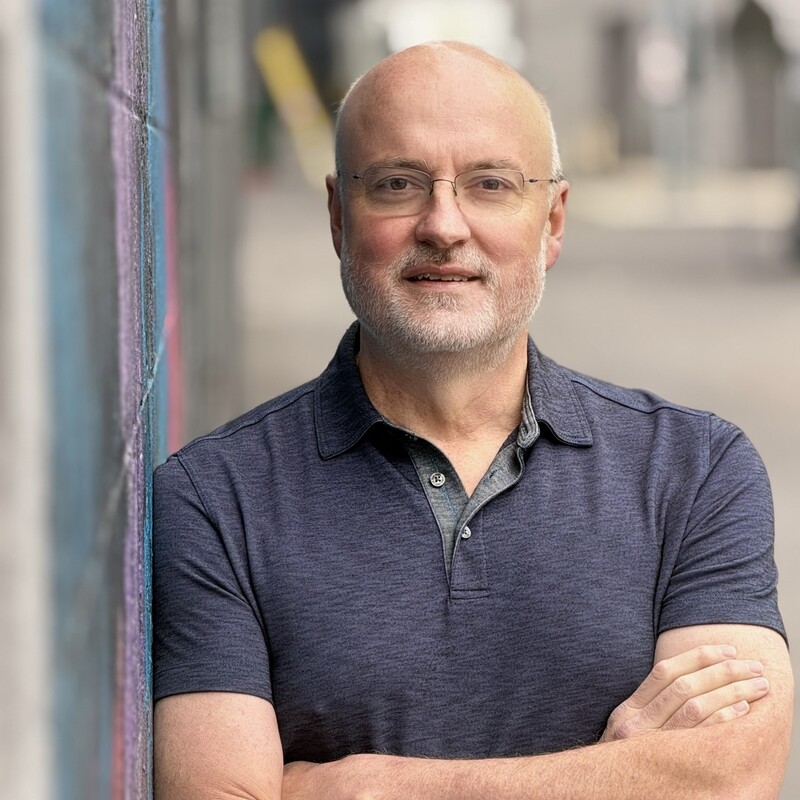
Mike Wheeler is the founder of Velza Training & Consulting and an O’Reilly published author. He has taught more than 500,000 learners across edX, LinkedIn Learning, Pearson, and Udemy, and he teaches live AI and Salesforce certification prep at Velza.