Claude Certified Architect, Professional (CCAR-P): Exam Facts, Domains, and How to Prepare
The Claude Certified Architect, Professional, CCAR-P, is Anthropic's advanced certification for architects and senior engineers who design and deliver Claude solutions end to end: solution design, models and context, integration, evaluation, governance, stakeholder communication and team enablement. Here are the exam facts from Anthropic's own exam guide and policy pages, who is allowed to sit for it, the seven domains and their weights, and where to practice.
Two things to know before you plan. First, Anthropic says Claude certification exams are open to people who work at organizations in the Claude Partner Network, and you register with a company email. Second, this page follows the new exam guide, Version 1.1, effective December 7, 2026, which Anthropic posted on November 17. If your exam is before December 7, the July 2026 guide still describes your exam. I explain every change in my post CCAR-P Exam Guide Changes: Before and After.
Key Facts at a Glance
| Provider | Anthropic, delivered by Pearson |
|---|---|
| Who can register | People at Claude Partner Network organizations, with a company email on a recognized domain, age 18 or older |
| Exam guide | Version 1.1, effective December 7, 2026 (posted November 17, 2026); the July 2026 Version 1.0 applies to exams before December 7 |
| Format | 70 scenario-based multiple-choice questions (60 scored, 10 unscored and not identified); each states how many responses to select |
| Time | 120 minutes |
| Passing score | A scaled score of 720 on a scale of 100 to 1,000 |
| Price | $175 USD before any partner-tier discount |
| Prerequisites | None required; you can take it without holding the Architect, Foundations certification |
| Recommended experience | 3 years or more of systems architecture or platform engineering, and 6 months or more of hands-on work with Claude in production |
| Delivery | Proctored, online through Pearson OnVUE or at a Pearson test center; closed book |
| Languages | English and Japanese |
| Validity and renewal | 12 months; renew with a free online assessment before it expires |
| Rescheduling | Up to 1 hour before an online (OnVUE) appointment, or 48 hours before a test-center appointment, per the exam guide |
Exam Domains and Weights
- Solution Design and Architecture18%
- Claude Models, Prompting, and Context Engineering13%
- Integration21%
- Evaluation, Testing, and Optimization17%
- Governance, Safety, and Risk Management16%
- Stakeholder Communication and Lifecycle Management7%
- Developer Productivity and Operational Enablement8%
Hover over or tap a slice, or a row in the list, to see what that domain covers.
Solution Design and Architecture, 18% of the exam. Deciding what Claude, people or both should handle, evaluating end-to-end architectures and orchestrator and subagent splits, choosing architectural patterns, and selecting the deployment surface and agent runtime under residency and compliance constraints. Claude Models, Prompting, and Context Engineering, 13% of the exam. Choosing a model tier that meets every binding constraint, diagnosing and revising system prompts, selecting prompting techniques, token economics and cache breakpoints, and managing reasoning effort and context over long-running agents. Integration, 21% of the exam. Least-privilege tool configuration, authentication and authorization posture, relieving the binding performance constraint, monitoring gaps, retrieval architecture, connection mechanisms, and production reliability controls such as retries, idempotency and fallback routing. Evaluation, Testing, and Optimization, 17% of the exam. Finding evaluation coverage gaps, deriving evaluations from business processes, LLM-as-judge design and bias, experimental design, root-cause isolation from logs and traces, cost and latency optimization, and model version migration. Governance, Safety, and Risk Management, 16% of the exam. Guardrail placement, prompt injection through documents, tools, MCP servers and Skills, ranking risks, human-in-the-loop checkpoints, architectural controls for compliance obligations, and bias sources. Stakeholder Communication and Lifecycle Management, 7% of the exam. Spotting commitments in requirements or SLAs that the architecture cannot meet, writing clear architecture decision records, and complete operational handoffs. Developer Productivity and Operational Enablement, 8% of the exam. Packaging and distributing Claude Code workflows across an organization, configuring the Agent SDK and Claude Code for teams, and keeping human accountability for AI-generated code.What the Exam Covers
Solution Design and Architecture
Deciding what Claude, people or both should handle, evaluating end-to-end architectures and orchestrator and subagent splits, choosing architectural patterns, and selecting the deployment surface and agent runtime under residency and compliance constraints.
Claude Models, Prompting, and Context Engineering
Choosing a model tier that meets every binding constraint, diagnosing and revising system prompts, selecting prompting techniques, token economics and cache breakpoints, and managing reasoning effort and context over long-running agents.
Integration
Least-privilege tool configuration, authentication and authorization posture, relieving the binding performance constraint, monitoring gaps, retrieval architecture, connection mechanisms, and production reliability controls such as retries, idempotency and fallback routing.
Evaluation, Testing, and Optimization
Finding evaluation coverage gaps, deriving evaluations from business processes, LLM-as-judge design and bias, experimental design, root-cause isolation from logs and traces, cost and latency optimization, and model version migration.
Governance, Safety, and Risk Management
Guardrail placement, prompt injection through documents, tools, MCP servers and Skills, ranking risks, human-in-the-loop checkpoints, architectural controls for compliance obligations, and bias sources.
Stakeholder Communication and Lifecycle Management
Spotting commitments in requirements or SLAs that the architecture cannot meet, writing clear architecture decision records, and complete operational handoffs.
Developer Productivity and Operational Enablement
Packaging and distributing Claude Code workflows across an organization, configuring the Agent SDK and Claude Code for teams, and keeping human accountability for AI-generated code.
Summarized from Anthropic's published exam guide. Read the official guide for the full list of skills.
How to Prepare
- Free CCAR-P readiness scorecard: Rate yourself against every objective in the exam guide and see where to focus.
- CCAR-P practice tests on Udemy: My practice tests for the Claude Certified Architect, Professional.
- Live CCAR-P prep with Velza: A live CCAR-P course built on the December 7 guide is in planning. Join the waitlist to hear when a cohort is scheduled.
- AI Glossary for Work: Plain definitions of RAG, MCP, guardrails and the other terms the exam uses.
Current Job Postings Mentioning CCAR-P
- Head of AI, United Tech
- Forward Deployed Engineer (New York), TribalScale
- Lead Optimizely Solutions Architect, Valtech
- AI Engineering Lead/Architect, Roboyo
- Agentic AI Cloud Engineer, PwC
Official Resources
- Anthropic: Claude Certified Architect, Professional exam guide (PDF, Version 1.1, effective December 7, 2026)
- Anthropic: Claude Certified Architect, Professional exam guide (PDF, Version 1.0)
- Anthropic Partner Academy: Who can take a Claude certification exam
- Anthropic Partner Academy: Certification FAQ
- Pearson VUE: Anthropic exams (December 7, 2026 update notice)
Details on Anthropic's pages can change. Go to Anthropic for the latest.
More from Velza
- The Velza Blog: certification guides, AI at work, Salesforce, and jobs data.
- Free exam readiness scorecards for other AI and Salesforce certifications.
- Velza AI Job Search: search live listings by job title and company.
My goal at Velza is to train, inspire, and equip you for your own AI pivot.
About the Author
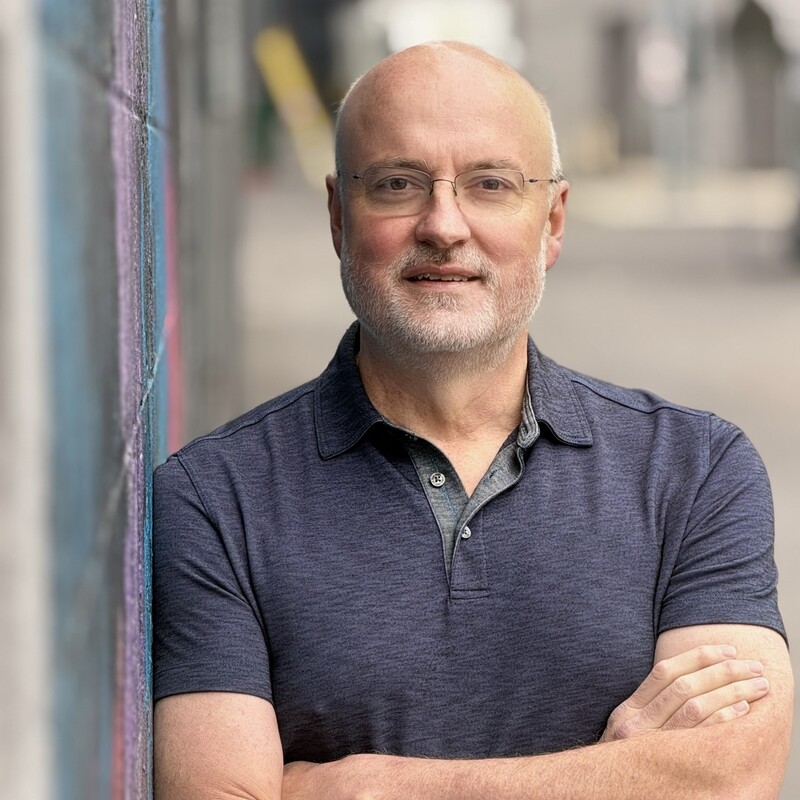
Mike Wheeler is the founder of Velza Training & Consulting and an O’Reilly published author. He has taught more than 500,000 learners across edX, LinkedIn Learning, Pearson, and Udemy, and he teaches live AI and Salesforce certification prep at Velza.