Velza Academy VELZA ACADEMY CCAR-F
Cohort
Enroll

✦ Velza Academy · Claude Certified Architect – Foundations (CCAR-F)

Prepare for the Claude Certified Architect – Foundations (CCAR-F) exam

Work through the architecture decisions the exam tests, from agent orchestration and MCP tool design to Claude Code team setup, structured output, and reliability. The course is built for developers and architects who already build with the Claude API, the Agent SDK, Claude Code, or MCP.

3 live teaching sessionsThree optional Friday office hours1-year replay accessOriginal practice casesNo API spend required

Looking for the Claude Associate live course? It prepares non-coders for the entry-level Claude certification, with no software-development or API experience needed.
CCAR-F official certification badge
Choose your cohort
Next cohort starts in $149 $74Save $75Code HALFOFF applied automatically
✦ Your instructor

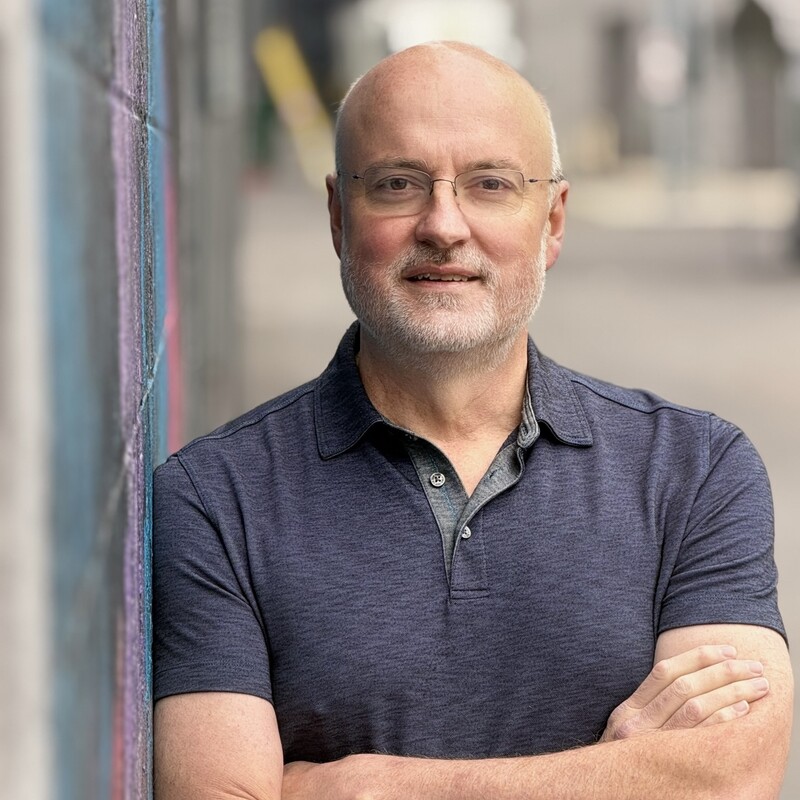
Mike Wheeler, founder of Velza Training and Consulting

Learn from Mike Wheeler

Mike Wheeler is an AI and Salesforce trainer and O’Reilly author. He has taught well over 500,000 global learners on major platforms such as edX, LinkedIn Learning, Pearson, and Udemy, and he built the first generative AI course on edX. He teaches technical practitioners and working professionals, working backward from your career goals.

500,000+ global learners taught O’Reilly author As Seen on edX, Pearson, LinkedIn Learning & Udemy

Who this is for

This cohort is for solution architects and technical practitioners with hands-on Claude development experience who want to reason through architecture and implementation tradeoffs.

The official guide describes an intended candidate who typically has six months or more of practical work across the Claude API, Agent SDK, Claude Code, and MCP. This course organizes and exercises that experience; it is not an introduction to AI chat.

✦ The curriculum & schedule

Your live sessions

Three live teaching sessions plus three optional Friday office hours over three weeks. Can’t attend live? Every session is recorded.

Three live teaching sessions over three weeks. Can’t attend live? Every session is recorded.

Session1
Wednesday, October 7
2-3 PM Central

Design Agent Architecture and Orchestration

Turn requirements into an agent architecture that makes the agent loop, subagent roles, enforced steps, and handoffs explicit.

  • Map a sample support workflow into agent responsibilities
  • Compare coordinator and subagent designs and the context each subagent receives
  • Trace the agent loop and where hooks enforce a business rule
  • Plan enforcement points, handoffs, and when to resume or fork a session
  • Create an architecture diagram with responsibilities and control points
Session2
Friday, October 9
2-3 PM Central

Office Hours Optional

Job-market intel and open Q&A, shared across the October Velza Academy cohorts.

Session3
Wednesday, October 14
2-3 PM Central

Design Tools and Configure Claude Code

Design the tools and MCP servers an agent relies on, then decide how a team guides Claude Code, from shared instructions to the CI pipeline.

  • Define MCP tool contracts, structured errors, and scoped tool access
  • Connect MCP servers and choose the right built-in tools
  • Organize CLAUDE.md instructions, skills, and path-specific rules
  • Compare planning and execution workflows and run Claude Code in continuous integration
  • Create a tool-interface design and a team configuration plan
Session4
Friday, October 16
2-3 PM Central

Office Hours Optional

Job-market intel and open Q&A, shared across the October Velza Academy cohorts.

Session5
Wednesday, October 21
2-3 PM Central

Structure the Output and Make the Design Reliable

Specify and validate structured output, then reason about context, escalation, errors, and human review, and defend your decisions in realistic scenarios.

  • Use explicit criteria, examples, and schemas for document extraction
  • Plan validation, retries, batch processing, and multi-pass review
  • Manage long contexts, escalation triggers, and errors passed between agents
  • Plan human review, confidence calibration, and source provenance
  • Work original practice cases, then write a reliability checklist and decision record
Session6
Friday, October 23
2-3 PM Central

Office Hours Optional

Job-market intel and open Q&A, shared across the October Velza Academy cohorts.

Session1
Wednesday, November 4
8:30-9:30 PM Central

Design Agent Architecture and Orchestration

Turn requirements into an agent architecture that makes the agent loop, subagent roles, enforced steps, and handoffs explicit.

  • Map a sample support workflow into agent responsibilities
  • Compare coordinator and subagent designs and the context each subagent receives
  • Trace the agent loop and where hooks enforce a business rule
  • Plan enforcement points, handoffs, and when to resume or fork a session
  • Create an architecture diagram with responsibilities and control points
Session2
Wednesday, November 11
8:30-9:30 PM Central

Design Tools and Configure Claude Code

Design the tools and MCP servers an agent relies on, then decide how a team guides Claude Code, from shared instructions to the CI pipeline.

  • Define MCP tool contracts, structured errors, and scoped tool access
  • Connect MCP servers and choose the right built-in tools
  • Organize CLAUDE.md instructions, skills, and path-specific rules
  • Compare planning and execution workflows and run Claude Code in continuous integration
  • Create a tool-interface design and a team configuration plan
Session3
Wednesday, November 18
8:30-9:30 PM Central

Structure the Output and Make the Design Reliable

Specify and validate structured output, then reason about context, escalation, errors, and human review, and defend your decisions in realistic scenarios.

  • Use explicit criteria, examples, and schemas for document extraction
  • Plan validation, retries, batch processing, and multi-pass review
  • Manage long contexts, escalation triggers, and errors passed between agents
  • Plan human review, confidence calibration, and source provenance
  • Work original practice cases, then write a reliability checklist and decision record

✦ What you’ll walk away with

By the end, you’ll be able to

Learn through guided practice and discussion.

Three weekly live teaching sessions with worked technical examples, guided practice, discussion, and original exam-style scenarios. Bring practical development experience and use the exercises to identify gaps in your preparation. This course supplements hands-on experience; completing the course does not guarantee certification. What you need: a text editor and access to Claude. No API account or API spend is required.

The exam at a glance

The exam has 60 multiple-choice and multiple-response items built around 4 scenarios drawn from a bank of 6. You have 120 minutes, proctored online or at a Pearson test center. Passing is a scaled score of 720 on a scale of 100 to 1,000. The exam fee is $125 USD, and the credential is valid for 12 months. Source: Anthropic’s exam guide, version 1.0, effective July 2026, which is subject to change.

✦ Exam coverage

What the CCAR-F exam covers

Use the weekly practice to guide your preparation.

Agentic Architecture & Orchestration27%
Tool Design & MCP Integration18%
Claude Code Configuration & Workflows20%
Prompt Engineering & Structured Output20%
Context Management & Reliability15%

Not sure where you stand? Grade yourself domain by domain with the free readiness scorecard. It opens in a new tab, and you can re-score as you study.

✦ What’s included

Everything that’s included

3 live teaching sessions plus 3 office hours

Live over three weeks, Wednesdays at 2-3 PM Central, plus three optional Friday office hours at 2-3 PM Central for job-market intel and open Q&A.

3 live teaching sessions

Live over three weeks, Wednesday evenings at 8:30-9:30 PM Central.

1-year replay access

Every session is recorded, and you keep access to the replays for a full year, so you can rewatch any time before your exam.

Weekly hands-on projects

In week one you build an architecture diagram that shows agent responsibilities, enforcement points, handoffs, and a session strategy. In week two you write tool contracts for the sample agent and a team plan for shared instructions, path rules, skills, and CI review. In week three you write an output specification with a schema and validation, a checklist for failure and recovery paths, and a decision record that explains your architecture choices.

Free readiness scorecard

Rate yourself on every CCAR-F exam domain, weighted by the official blueprint, then re-score as you study. Get yours here.

The scorecard grades you domain by domain, weighted by the official blueprint.

Certificate of completion

Finish the cohort and you get a personalized certificate showing your name, your track, the live session dates, and the hours of live instruction, with a public verification link your employer can check for reimbursement. Print it, save it as a PDF, or share it on LinkedIn.

Reserve your seat in the next cohort.

$149 $74Save $75Code HALFOFF is applied automatically. Nothing to type.

See cohorts
Cohort:

✦ Questions, answered

Frequently asked

Is Foundations suitable for someone completely new to Claude?

This exam targets technical architects with practical Claude application experience. If you are new to using AI at work, begin with the workplace beginner course. This preparation course assumes you can discuss implementation choices and technical workflows.

Can anyone register for the certification exam?

You can join this training regardless of employer. Anthropic currently restricts exam registration to employees of Claude Partner Network organizations using a recognized company email address. Check Anthropic’s current eligibility rules before planning to take the exam. Course participation does not grant exam access.

Where can I check the official exam information?

Anthropic’s Architect Foundations certification page provides the official program information and exam guide. The weekly sequence here is Velza’s independent teaching plan.

Is the exam fee included?

No. This course is exam preparation. You register and pay Anthropic for the exam separately.

Is there an official practice exam?

Anthropic retired its earlier practice exam when the program moved to Pearson, and the exam guide’s sample questions show the format. In class you work original practice cases built around the exam’s published domains.

What if I can’t make a session live?

Every session is recorded and shared, and you keep access to the replays for a full year, so you can watch or rewatch any of them on your own schedule. The optional Friday office hours are recorded too.Every session is recorded and shared, and you keep access to the replays for a full year, so you can watch or rewatch any of them on your own schedule.

Why a live cohort instead of studying on my own?

Self-study stalls. A live cohort gives you a fixed three-week pace, the chance to ask questions in real time, weekly hands-on work, and three optional Friday office hours. You actually finish.Self-study stalls. A live cohort gives you a fixed three-week pace, the chance to ask questions in real time, and weekly hands-on work. You actually finish.

Do I get a certificate of completion?

Yes. When your cohort ends, you receive a personalized certificate of completion by email. It shows your name, the track, the live session dates, and the hours of live instruction, and it carries a certificate number with a public verification address your employer can confirm it against, which is what most reimbursement forms need. It is a certificate of completion for the live course, not the certification itself. That one comes from the certifying body when you pass their exam.

What is your refund policy?

You can request a full refund until 24 hours after the first live session starts. Details are in our Terms.